Buying a new pair of headphones may seem simple until you see hundreds of options available online and in stores. From budget models to premium wireless headphones, every product claims to deliver the best sound quality and comfort.
The truth is that the best headphones are not always the most expensive ones. The right choice depends on how you plan to use them. Whether you want headphones for music, gaming, work, travel, or workouts, understanding the key features will help you make a smart purchase.
This headphone buying guide explains everything you need to know before buying a new pair of headphones.
Determine How You Will Use Your Headphones
The first step is identifying your primary use. Different activities require different types of headphones.
Music Listening
If you mainly listen to music, focus on balanced sound quality, comfort, and good battery life if you choose wireless headphones.
Gaming
Gamers should prioritize low audio latency, clear microphone quality, surround sound support, and long-lasting comfort for extended gaming sessions.
Office and Remote Work
Professionals should look for headphones with a high-quality microphone, active noise cancellation, and all-day comfort for meetings and calls.
Travel
Frequent travelers benefit from lightweight headphones with active noise cancellation and long battery life.
Fitness
For workouts, choose sweat-resistant earbuds or headphones with a secure fit and an IP rating for water resistance.
Choose the Right Type of Headphones
Different headphone styles offer different advantages.
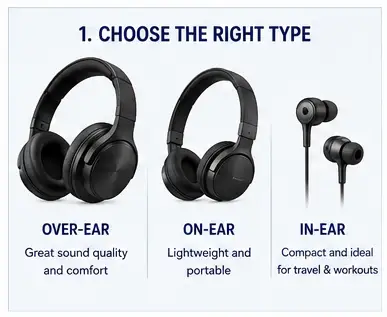
Over-Ear Headphones
Over-ear headphones completely surround your ears. They usually provide the best sound quality, excellent comfort, and superior noise isolation.
Pros
- Outstanding sound quality
- Comfortable for long sessions
- Better bass response
- Excellent noise isolation
Cons
- Larger and heavier
- Less portable
On-Ear Headphones
On-ear headphones rest directly on your ears instead of covering them.
Pros
- Lightweight
- Easy to carry
- Good sound quality
Cons
- Less comfortable for extended use
- More outside noise enters
In-Ear Earbuds
Earbuds fit inside your ear canal and are the most portable option.
Pros
- Compact and lightweight
- Great for travel
- Ideal for exercise
Cons
- Smaller soundstage
- Comfort varies by ear shape
Wired vs Wireless Headphones
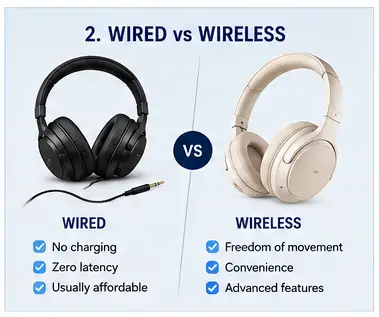
Both options have their own strengths.
Wired Headphones
Wired headphones offer a direct audio connection without worrying about battery life.
Advantages
- No charging required
- Zero wireless latency
- Consistent sound quality
- Usually more affordable
Wireless Headphones
Wireless headphones use Bluetooth technology for cable-free listening.
Advantages
- Greater freedom of movement
- Easy connection with smartphones
- Better for travel and commuting
- Many include advanced features such as ANC
Open-Back vs Closed-Back Headphones
Closed-Back
Closed-back headphones seal your ears and reduce outside noise. They work well in offices, public places, and while traveling.
Open-Back
Open-back headphones allow air to pass through the ear cups, creating a wider and more natural soundstage.
These are popular among audiophiles but are not suitable for noisy environments because sound leaks in both directions.
Sound Quality Matters
Manufacturers often advertise impressive specifications, but real-world listening experience matters more.
When evaluating sound quality, consider:
- Clear vocals
- Balanced bass
- Natural mids
- Crisp highs
- Wide soundstage
- Good instrument separation
Reading professional reviews and listening to sample units whenever possible is the best way to judge audio quality.
Understand Frequency Response
Frequency response indicates the range of sounds headphones can reproduce.
Most headphones list a range between 20 Hz and 20 kHz, which covers the normal range of human hearing.
A wider frequency range does not automatically mean better sound quality. Driver tuning plays a much bigger role.
Driver Size
Drivers produce the sound inside your headphones.
Common driver sizes include:
- 8 mm to 12 mm for earbuds
- 30 mm to 40 mm for portable headphones
- 40 mm to 50 mm for over-ear headphones
Larger drivers can produce stronger bass, but driver quality is more important than size alone.
Active Noise Cancellation vs Passive Noise Isolation
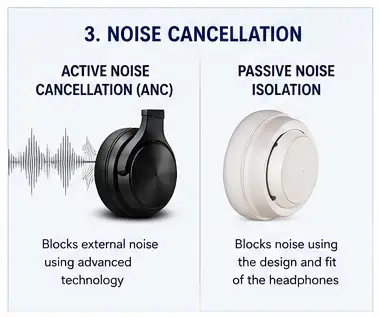
These two technologies work differently.
Active Noise Cancellation (ANC)
ANC uses microphones and electronic processing to reduce external noise.
It is ideal for:
- Air travel
- Public transportation
- Busy offices
- Coffee shops
Passive Noise Isolation
Passive isolation blocks sound using the physical design of the ear cups or ear tips.
Many budget headphones rely only on passive isolation.
Comfort Is Extremely Important
Even excellent sound quality becomes meaningless if your headphones become uncomfortable after thirty minutes.
Before buying, consider:
- Headband padding
- Ear cushion material
- Overall weight
- Clamp force
- Adjustable headband
If you plan to wear headphones for several hours, comfort should be one of your top priorities.
Battery Life
Battery life is essential for wireless headphones.
General recommendations:
- Casual use: 20 hours or more
- Frequent travel: 30 to 50 hours
- Premium models: 40 hours or more with ANC disabled
Also check charging speed and USB Type-C support.
Bluetooth Version
Modern wireless headphones typically use Bluetooth 5.2, 5.3, or newer.
Newer Bluetooth versions usually provide:
- Better connection stability
- Lower power consumption
- Longer wireless range
- Lower latency
Audio Codec Support
Bluetooth codecs affect wireless audio quality.
Common codecs include:
- SBC
- AAC
- aptX
- aptX Adaptive
- LDAC
- LC3
If you use an Android phone, LDAC or aptX support can improve wireless audio quality. Apple devices primarily use AAC.
Microphone Quality
If you frequently make calls or attend online meetings, microphone quality becomes very important.
Look for features such as:
- AI noise reduction
- Multiple microphones
- Wind noise suppression
- Voice enhancement
Water Resistance
For outdoor activities and workouts, choose headphones with an IP rating.
Examples include:
- IPX4 for sweat resistance
- IPX5 for rain resistance
- IPX7 for temporary water immersion
Controls and Smart Features
Modern headphones often include useful features such as:
- Touch controls
- Multipoint Bluetooth
- Voice assistant support
- Wear detection
- Custom EQ through a mobile app
- Transparency mode
- Find My Device support
Choose features that match your daily needs instead of paying for options you may never use.
Build Quality
A durable pair of headphones can last for years.
Look for:
- Metal reinforcement
- High-quality hinges
- Replaceable ear cushions
- Flexible headband
- Strong charging port
Good construction is especially important if you travel frequently.
Brand Reputation
Established brands often provide better software support, warranty service, and replacement parts.
Popular headphone brands include:
- Sony
- Bose
- Sennheiser
- JBL
- Audio-Technica
- Anker Soundcore
- Beats
- Skullcandy
- Logitech
- HyperX
Do not choose a product based only on brand name. Compare features, reviews, and long-term reliability.
Set a Realistic Budget
Determine your budget before shopping.
Entry Level
Suitable for casual listening and basic daily use.
Mid Range
Offers a strong balance of sound quality, comfort, battery life, and features.
Premium
Ideal for users who want the best audio quality, advanced ANC, premium materials, and additional smart features.
Buy the best headphones your budget allows instead of chasing features you may never use.
Check Warranty and After Sales Support
A good warranty can save money if something goes wrong.
Before purchasing, verify:
- Warranty duration
- Service center availability
- Replacement policy
- Return window
Reliable after-sales support is especially important for premium headphones.
Final Thoughts
Choosing the perfect headphones becomes much easier once you understand your priorities. Instead of focusing only on brand names or marketing claims, think about where and how you will use your headphones every day.
Pay attention to comfort, sound quality, battery life, microphone performance, build quality, and useful features that match your lifestyle. Taking the time to compare these factors will help you find headphones that deliver excellent value and years of enjoyable listening.
By following this headphone buying guide, you can confidently choose a pair that fits your needs and budget without feeling overwhelmed by the countless options available.
hey
Great guide for purchasing awesome headphone and headset it really helps
Thanks for sharing.
Keep it up.